Short Answer
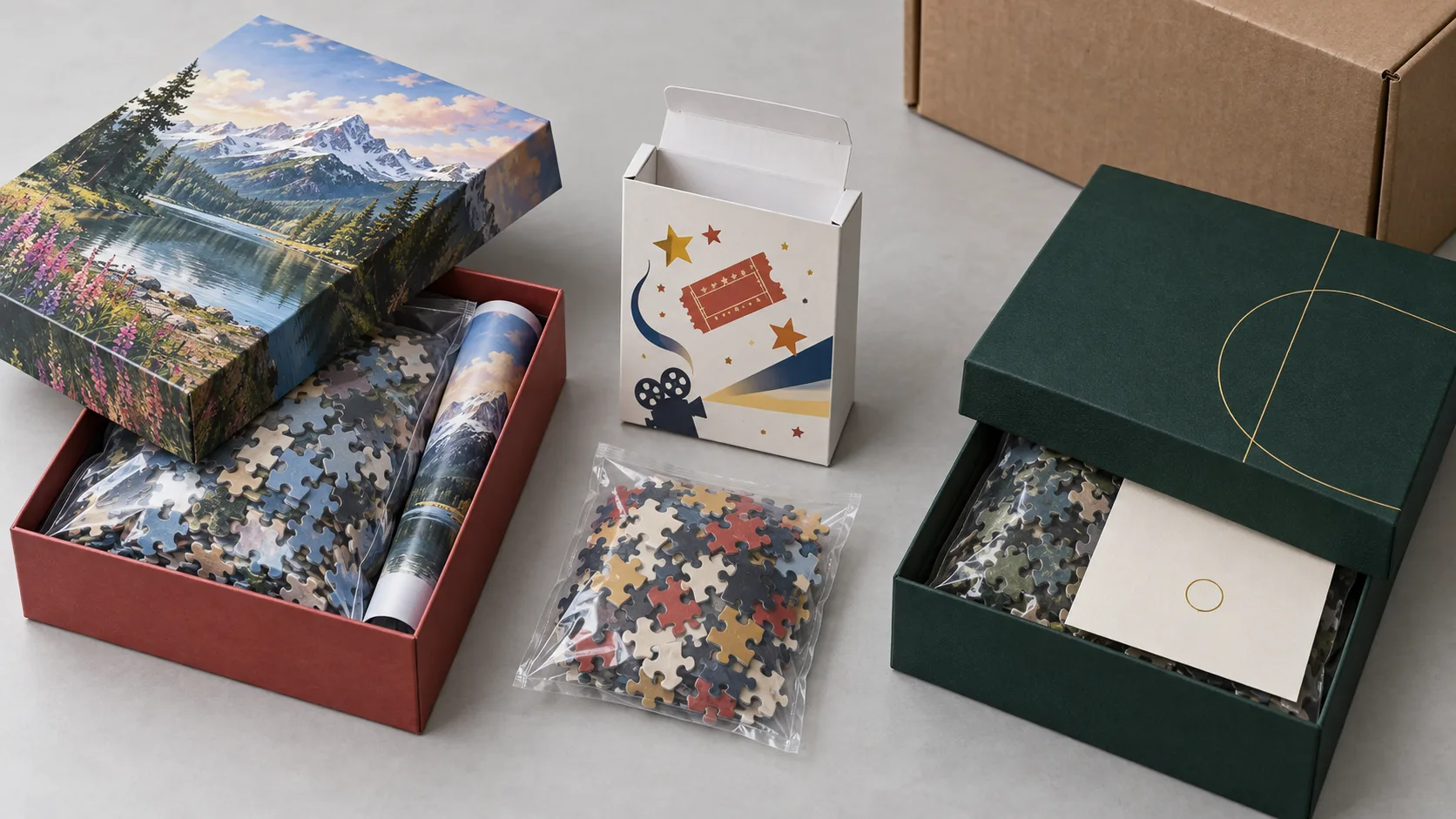
Start with the puzzle’s purpose. A puzzle sold on a retail shelf usually needs a printed box with clear product information. A puzzle handed out during an event or brand campaign may use a simpler printed white-card carton to control packaging cost. A corporate gift often puts more weight on presentation and the opening experience. These are directions, not fixed rules: a large promotional campaign can request premium packaging, while a practical corporate gift can use a simple box.
For any use, define one complete unit: finished puzzle size and piece count, pieces per inner bag or tray, any poster or insert, box structure, print and finish, quantity by design, labels, and export-carton plan. Confirm the packed construction with a physical sample before approving production. A 1,000-piece puzzle measuring 750 x 500 mm when assembled does not need a box that size; box dimensions follow the packed contents and the intended use.
South Print’s custom jigsaw puzzle printing page lists printed boxes, sleeves and inserts as project options. Their exact structure, material, size, packing method and price must be confirmed for the order. The retail 1,000-piece puzzle example illustrates one retail direction, not the standard for every promotional or gift project.
Compare the Three Uses Before Choosing a Box
| Use | Main buyer decision | Common packaging direction | Information to confirm |
|---|---|---|---|
| Retail sale | Shelf presentation, product identification and repeatable fulfillment | Printed retail box, with inner piece pack and optional poster | Sales channel, box artwork, barcode, seals and carton pack-out |
| Promotional giveaway | Reach, handout method and budget across the campaign quantity | Simple printed white-card folding carton when the contents and handling suit it | Quantity per artwork, event date, carton strength, assembly and distribution route |
| Corporate gift | Brand presentation and recipient experience | Printed two-piece or gift-style box, sleeve or insert as quoted | Gift message, opening sequence, finish, personalization and delivery address |
These uses overlap. A promotional puzzle can be given to a company’s clients, and a corporate gift can be distributed at an event. Choose the package from the recipient experience, budget and distribution route, not from the label “promotion” or “gift” alone. If the puzzle carries film, character or campaign artwork, the buyer should supply artwork they are authorized to use and approve the final printed content.
Define What One Recipient Receives
Before comparing boxes, write a one-sentence bill of contents. For example:
Retail example: one 1,000-piece puzzle in an inner bag, one folded reference poster and one printed two-piece box with an approved barcode area.
Promotional example: one compact puzzle in an inner bag, one printed white-card folding carton and a campaign message on the box. The event organizer confirms whether the product needs a separate insert or barcode.
Corporate gift example: one puzzle in an inner bag, a printed gift box, one message card and any agreed sleeve or insert. The buyer confirms whether all recipients receive the same artwork or different versions.
These are planning examples, not default South Print packages. A different project might need a tray, an instruction sheet, several small inner bags, or no poster. The buyer should decide which components are part of the product and which only move it safely. An export carton is not normally the box the recipient opens.
Also separate complete puzzle units from individual pieces and export cartons. An order of 500 promotional puzzle units is 500 complete puzzles. If each unit contains 1,000 pieces, the order contains 500,000 die-cut pieces before production allowance, plus 500 units of each confirmed insert or box component. If 10 units are packed per export carton, the planned carton count is 50, subject to final packing tests and any overage agreement.
Choose a Box for the Distribution Plan
Retail: Printed Box for Product Identification
A lid-and-base box gives the front artwork, side panels and back panel room to identify the image, piece count, finished puzzle size and brand. It is a useful direction for artwork-led retail products and repeated shelf display. Buyers should define how the lid fits, whether the pieces are bagged or contained by a tray, the finish of the printed wrap, and whether a poster sits above or below the piece pack. A compact retail puzzle may use a different confirmed structure.
Do not select the box depth from a catalog photo. A shallow box may look attractive but leave no room for the actual filled bag; an unnecessarily deep box can increase material use and packed volume. Confirm depth with the chosen board, inner pack, insert and physical sample.
Promotion: Simple Printed White-Card Carton
A printed white-card folding carton can be a practical lower-cost packaging direction for a high-volume giveaway when the puzzle format, packed weight and distribution method suit it. Examples include a film-linked promotion, a restaurant handout or an event campaign. These are use-case examples, not claims about a particular brand’s project. A simple carton may prioritize the campaign image, sponsor message and easy handout over a long retail shelf life.
The carton still has to hold the filled piece bag and close reliably. Confirm whether the bag can pass through the opening, whether the paperboard and folds hold shape after packing, and whether the units travel in protective export cartons. Compare the total printed, assembled and packed unit cost; white card does not make every project the cheapest automatically. A sleeve alone does not contain loose pieces without an inner pack or underlying box.
Corporate Gift: Presentation and Opening Experience
Corporate gifts may use a printed two-piece box, sleeve, insert or other gift-style construction. A message card, carefully arranged poster or restrained special finish can make the product feel more intentional. Ask which elements the recipient will see first, whether the gift is sent individually or handed over in person, and how many designs or recipient versions need sorting. Quote the additional box material, finish and assembly work explicitly.
A gift does not require a rigid or expensive box by definition. A well-printed folding carton may be suitable when the brand message and budget call for it. Likewise, a promotional campaign may choose a premium gift box for selected recipients. The buyer’s desired impression and delivery method should determine the choice.
Additions That Need Their Own Scope
An inner tray, window, belly band, poster or gift insert can be discussed for a particular project. Each addition changes die-lines, assembly steps, unit weight and quote scope. Treat these as design options rather than assumed South Print standard features. If the main goal is selecting 100, 500 or 1,000 pieces, read the separate piece-count and size guide first.
| Decision | What the buyer should define | What to confirm in a sample |
|---|---|---|
| Box structure | Lid-and-base, folding carton or another proposed format | Closure, opening experience and packed fit |
| Inner containment | Bag, tray or another confirmed method | Loose pieces stay together and can be removed cleanly |
| Reference image | Printed box image, poster, insert or combination | Image legibility and how the insert fits |
| Print and finish | Campaign or brand artwork, coating and optional special finish | Appearance on the actual material |
| Seal | Whether each unit needs a seal or wrap | Placement, opening and visibility of essential information |
Size the Box Around the Packed Contents
Ask for a measured sample of the loose pieces in their intended bag or tray. The volume changes with piece count, piece shape, board thickness and how the pieces settle. A folded poster, instruction sheet or divider takes more space and may need a different box depth. The carton must also allow a practical packing and opening process without crushing the contents or leaving excessive movement.
Start a packaging brief with these measurements and decisions:
- Finished assembled puzzle width and height, plus piece count.
- Puzzle board thickness and whether pieces use one or multiple inner packs.
- Flat or folded dimensions of every poster, instruction sheet and insert.
- Desired box outside dimensions, if a shelf, handout bag or mailer imposes a limit.
- Maximum packed unit weight and any event, retailer or fulfillment constraints supplied by the buyer.
The manufacturer can then propose an internal fit and confirm the resulting external dimensions. A box dieline should be approved after the structure is chosen. Final artwork must follow that dieline, including panels, folds, bleed and safe areas. The puzzle artwork guide explains the file handoff in more detail.
Decide How the Pieces and Reference Image Are Packed
The inner pack is easy to omit from a brief because buyers tend to focus on the printed box. It affects whether a recipient receives loose pieces when the lid opens and whether the pack-out team can assemble each complete unit consistently. Specify the intended bag or tray, its closure, and whether pieces from different designs must be kept separate during packing.
A reference poster may help customers view the full image while the box lid is elsewhere. State whether it is included, its unfolded and folded size, paper type, print sides, and where it sits in the box. A small puzzle or a box with a clear full-image cover may not need a separate poster. If the project includes instructions, safety or market-specific information, identify the exact sheet and approved wording rather than assuming that a generic insert covers those needs.
For several puzzle designs in one order, create a pack-out sheet per SKU or campaign version. Match each puzzle image, piece pack, poster, message card and printed box by design code. A photo of the intended open box and a component checklist are useful approval references. This matters when different licensed or approved campaign images, event locations or gift-recipient groups share the same box shape.
Plan Information for the Sales or Handout Channel
For retail sale, reserve space for the brand, product name, piece count, assembled size, image, SKU, barcode and any information the buyer’s target market requires. A promotional handout may instead prioritize the campaign artwork, offer or event information; a corporate gift may prioritize the recipient message and brand presentation. Whether a barcode is needed depends on the actual distribution plan. The buyer should supply the final approved copy, barcode artwork where relevant, and any required legal or safety wording. The printing factory can review printability and placement, while the buyer approves claims, rights, age grading, warnings and listing accuracy.
For Amazon or another fulfillment program, ask the seller to provide the current requirements for the specific marketplace, SKU and shipment workflow. Preparation and labeling can vary by product and program. Amazon’s FBA preparation guidance says sellers should check the applicable preparation category in their account. Do not treat a generic puzzle box specification as guaranteed marketplace approval. Confirm whether the factory is expected to print or apply unit labels, bundle marks, seals or other approved identifiers, and who supplies those files.
For independent ecommerce or direct-to-recipient gifts, decide whether the presentation box will sit inside a separate shipping package. A promotional handout may travel in a bulk carton and only be opened at the event. Carrier packing guidance emphasizes restricting movement and matching the package to the product. If a brand wants to ship in the product box itself, have that exact packed configuration evaluated for its real route and handling conditions; do not infer transit performance from a clean product photo.
Define Export Cartons and Handling
Ask for a proposed number of complete puzzles per export carton, carton dimensions, gross weight and packing direction. A carton that looks efficient on a spreadsheet may crush a gift-box lid, crease a white-card promotional carton or allow units to move. Confirm whether protective sheets, dividers or filler are part of the quoted pack-out. Campaign deliveries may need carton labels by venue or event date; corporate gifts may need recipient-version sorting. Marking, pallet details and distribution split depend on the buyer’s plan and destination.
If the project needs formal distribution testing, specify the test protocol and pass criteria before samples are built. For example, ISTA Procedure 3A is described by ISTA as a general simulation for individually packaged products in parcel delivery. Mentioning a test method in a brief is not evidence that a particular South Print package has passed it. The buyer and manufacturer should agree whether testing applies to the puzzle unit, the transport package, or both.
Compare Quotes on the Same Scope
A low unit price can exclude work the buyer expected to receive. Ask suppliers to price the same complete puzzle unit and state each inclusion. Compare:
- Puzzle format, board and quantity per design, including any new tooling.
- Printed box structure, material, dimensions and finish, including a white-card option for a cost-focused promotion when suitable.
- Inner bag or tray, poster, instruction sheet and other inserts.
- Unit assembly, campaign or gift-version sorting, sealing, labels and any inspection requirement.
- Export carton pack-out, carton markings and agreed shipping terms.
South Print’s published puzzle price references are early planning figures for the named formats and quantities. They are not a universal rate for every white-card carton, retail box, gift box, insert, special finish, assembly operation or delivery destination. Ask which components the specific quoted unit price includes. The general custom paper product RFQ checklist can help organize the remaining order information.
What to Send for a Packaging Quote
Send one brief per SKU, campaign version or gift version, or a table with one row per design. Include:
- Purpose: retail sale, promotional giveaway, corporate gift or a combination; describe where and how recipients receive it.
- Finished puzzle size, piece count, board preference and estimated pieces per inner pack.
- Quantity of complete units for each design, plus total order quantity.
- Photos or sketches of the preferred box structure, target external size, budget direction and any shelf or handout constraint.
- Inner bag or tray, poster, insert, seal, gift message and label requirements.
- Puzzle image, box artwork status, barcode file if needed, and final campaign or market-specific copy status.
- Distribution channel, destination, trade term, event deadline or gift-delivery schedule, and any supplied fulfillment requirements.
- Desired export-carton configuration, venue or recipient sorting and whether a transit test is required.
If some details are undecided, identify them as open questions. Ask for two clearly defined options, such as a printed two-piece box with a poster and a white-card folding carton without a poster. The resulting quotes will be more useful than two prices for vaguely described “custom puzzle packaging.” For a corporate gift, compare any upgrade against the actual recipient experience rather than assuming a premium box is necessary.
Before approving mass production, inspect a fully assembled sample: all pieces in the correct inner pack, correct poster and box artwork, acceptable opening fit, readable barcode if required, correct campaign or gift version, and a documented export-carton arrangement. Approve the exact configuration that the quote and order describe.
FAQ
Which box can work for a promotional puzzle giveaway?
A simple printed white-card folding carton can work when the puzzle format, packed weight and handout route suit it. Confirm the board, closure, inner piece pack, assembly and export-carton protection. Compare the total packed-unit quote rather than assuming one material always produces the lowest price.
Does a corporate gift puzzle need a premium rigid box?
No. A printed two-piece box, sleeve or well-executed folding carton may suit the gift. Choose from the recipient experience, delivery method, quantity and budget, then confirm the structure and finish in a physical sample.
Can the same puzzle design serve retail and promotional uses?
Possibly. The puzzle image and die may stay the same, while box copy, barcode, insert, packaging structure and quantity per version change. Quote and approve each pack-out version separately.
Does the assembled puzzle size determine the box size?
No. The box fits the loose pieces and their inner pack, plus any poster or insert. Shelf, handout and shipping limits also matter. Confirm final internal and external dimensions with a packed physical sample.
Do custom puzzles need an inner bag?
The inner containment method should be specified for each project. A bag is one option; a suitable tray or other confirmed construction may also work. A printed box alone should not be assumed to keep loose pieces together.
What determines the price of a custom puzzle box?
Structure, dimensions, material, print and finish, quantity per design, inserts, inner containment, assembly, version sorting, labels, export packing and shipping scope can all change the quote. Request prices against the same complete specification.
If you are preparing a retail, promotional or corporate gift puzzle, send the intended use, specification and available artwork to sales@southprintcn.com or WhatsApp +86 136 5876 5908. You can also browse the other South Print printing guides before finalizing your brief.