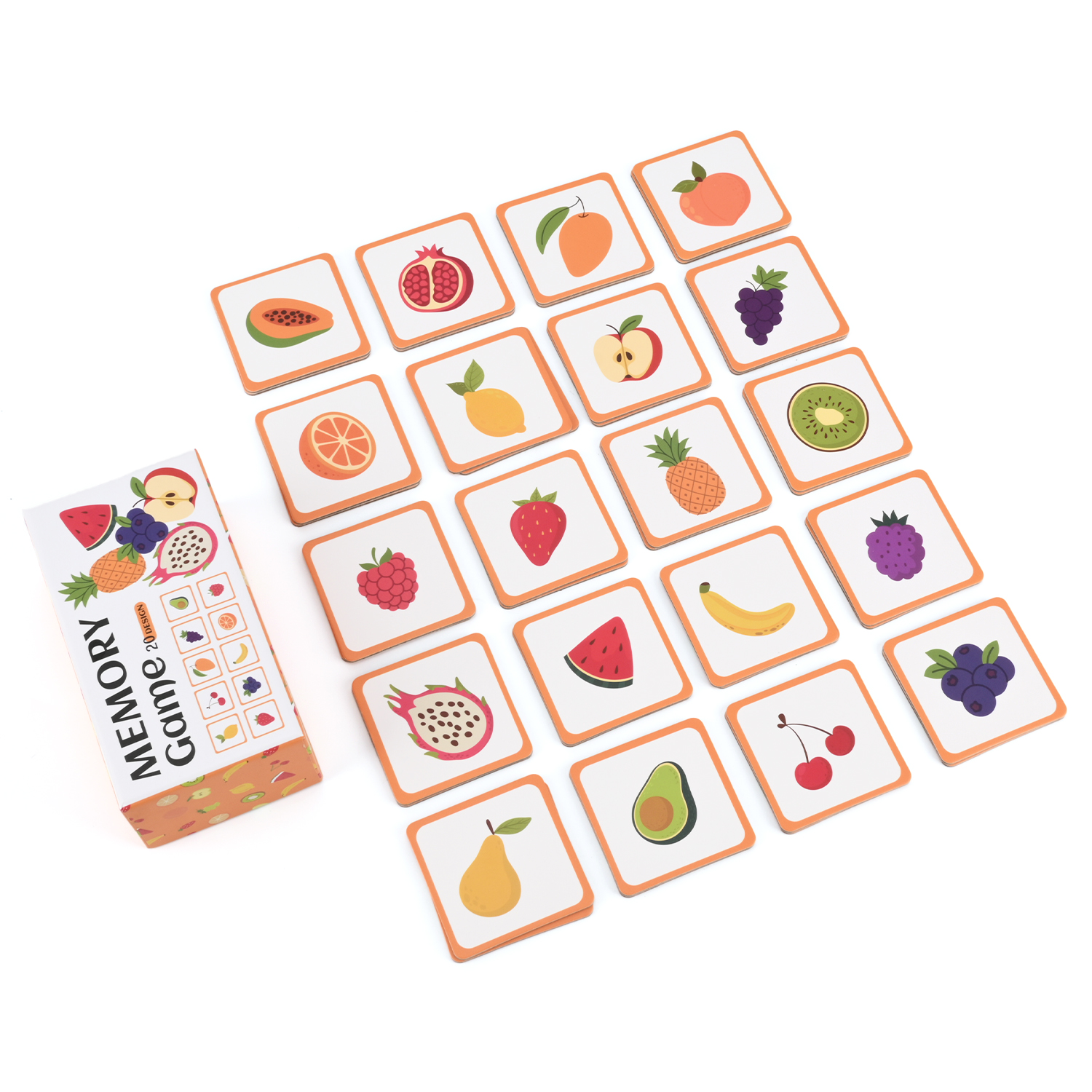
Short Answer
For a standard two-card matching game, multiply the number of pairs by two to get the number of game cards. A 24-pair game contains 48 game cards. Add any separately specified title or instruction cards to the physical card count, and list a folded leaflet separately if one is included.
South Print commonly discusses two material directions: lower-cost white cardstock for promotional use, and a layered construction with greyboard in the middle for higher-priced products intended for sale. For the common card back, we generally recommend spot-color printing to help keep the color consistent across the game cards. Confirm the actual stock, finish and back appearance on a finished sample.
An ordinary matching game usually does not include a separate instruction leaflet unless there are special rules or the buyer requests one. Define the contents before pricing and sizing the box.
This guide is about printed tabletop memory matching card games, not electronic memory or SD cards.
Count Pairs, Physical Cards and Artwork Files Separately
The word design can mean one picture, one card face or one complete game version. Replace it with an explicit count in the specification.
| Pairs | Game cards | Extra cards | Total cards |
|---|---|---|---|
| 12 | 24 | None | 24 |
| 24 | 48 | None | 48 |
| 24 | 48 | 1 rules card | 49 |
| 32 | 64 | None | 64 |
These examples explain counting, not recommended age ranges, standard prices or fixed production formats. A leaflet is an additional printed component, not another game card.
For 24 pairs of identical pictures, there may be 24 unique face artworks printed twice per set. For 24 picture-and-word pairs, there may be 48 distinct face artworks. Both contain 48 game cards, but the card list and checking work differ.
State the matching rule and the required copies of each face. A set containing 48 cards is not necessarily correct if one pair is missing and another is duplicated. For file naming and visual maps, use our memory matching game artwork guide.
Choose the Pair Count for the Intended Game
Decide how the game will be used, the available table space and whether all pairs must be played at once. A game may allow a smaller selection of complete pairs for a shorter session, if that is part of the intended rules.
More pairs mean more game cards, but do not by themselves determine the correct age group, difficulty or play duration. Image similarity and the matching rule also matter. Test the proposed game with its intended users before treating a pair count as a finished product decision.
If the rules use groups of three, uneven categories or special action cards, the two-cards-per-pair formula does not describe the entire set. Supply the actual component list.
White Cardstock or a Greyboard-Center Construction?
The two common material directions serve different budget and presentation needs.
| Construction | Common South Print use | What to confirm |
|---|---|---|
| White cardstock | Lower-cost promotional matching games | Actual stock, thickness, opacity, finish and handling |
| Printed layers with greyboard in the middle | Higher-priced matching games intended for sale | Finished thickness, bonding, edge quality, finish and packed stack size |
These are common directions, not a rule that retail games must use greyboard or promotional games must use white cardstock. Tell us the intended use and budget so the options can be compared against the same card size, count and packing requirements.
Greyboard in the middle describes the construction; it is not interchangeable with every stock sold as grey-core playing-card paper. Ask for the actual material specification and a sample rather than choosing from the word core alone.
Check whether faces show through, whether cards lie and handle consistently, and whether the edges and corners suit the intended use. A thicker construction also changes the full stack and the box it needs. The card-stock selection guide covers material evaluation in more detail.
Keep the Backs Consistent During Face-Down Play
For ordinary memory matching play, the backs should not give away which face is underneath. Use the same approved back design for all cards that remain face down together.
South Print generally recommends a spot color for the common back to help improve color consistency. Spot-color printing uses a specified ink color; simply naming a Pantone reference while printing a CMYK approximation is a different production specification. Confirm how the back will actually be printed when requesting the quote.
This recommendation does not guarantee zero color variation. Material, finish and production conditions still need control. Compare finished cards from different pairs side by side with their backs up. Also look for show-through, visible trim or border differences, corner differences and surface marks that could act as clues. A consistent ink color alone does not resolve every possible identification clue.
If the game deliberately uses different back groups, record that rule and each back assignment. Keep optional instruction or title cards out of the face-down game layout unless the rules include them.
Decide Whether Instructions Are Actually Needed
For a straightforward matching game without special rules, South Print normally does not include a separate instruction leaflet. The basic game is simple, and the buyer can confirm whether any short rules text is wanted on the packaging.
Consider an instruction card or leaflet when the game adds scoring, special actions, several play modes or unfamiliar picture-and-word relationships, or when the buyer specifically needs an explanation. Agree the wording and language versions before quotation and approval.
An instruction card increases the physical card count. A folded leaflet adds its own print specification and takes space in the package. Neither should be added automatically just because a previous card-deck order included one.
Gameplay instructions and any applicable product information are separate decisions. Omitting a rules leaflet does not mean omitting information required for the actual product and market.
Size the Package From the Confirmed Contents
Choose a packaging direction after confirming card size, total count, construction and finish. Test the complete stack with any agreed insert or inner wrap before finalizing the box dimensions.
A white-cardstock deck and a greyboard-center set with the same pair count can need different box depths. Do not transfer a box size from a photo or from another material version without checking the filled sample.
Compare folding boxes and gift boxes in our custom card-deck packaging guide. Packaging is quoted as part of the actual set configuration.
Keep Memory Game Pricing Separate From Flash Card References
South Print’s standard Flash Card reference prices should not be applied automatically to a memory matching game. Total physical cards, size, material construction, spot-color printing, finish, packaging, set quantity and language versions can all affect the quote.
Write the order as a number of complete sets, with the contents of each set stated separately. For example: 500 complete sets, each containing 24 pairs / 48 game cards, one common back, no instruction leaflet and one specified box. This is a specification example, not a price offer.
For the product distinction, see memory card games versus Flash Cards.
Approve a Complete Set
Before production approval, compare the sample with the component list:
- Every intended pair is present with the correct faces and number of copies.
- The total game-card count and any optional extra cards are correct.
- The common backs are visually consistent and do not reveal the faces during normal play.
- Material, thickness, finish, edges and corners match the agreed sample specification.
- Any special rules, translations and language versions have been approved by the buyer.
- The complete contents fit the box and the packaging count matches the actual set.
Send the pair count, matching rule, total physical cards, card size, material preference, back-printing requirement, optional instructions, packaging, set quantity and destination to sales@southprintcn.com or WhatsApp. Explore our custom printed memory card service for the options to discuss.
Frequently Asked Questions
How many cards are in a 24-pair memory matching game?
A standard two-card matching game with 24 pairs has 48 game cards. Add any separately specified title or instruction cards to the total physical card count; list a leaflet as a separate component.
Which materials does South Print commonly use for memory matching games?
Two common directions are lower-cost white cardstock for promotional use and a layered construction with greyboard in the middle for higher-priced products intended for sale. Confirm the actual construction, thickness and finish for the project.
Why recommend a spot color for the card backs?
It can help keep the common back color consistent, reducing one possible clue to card identity. It does not guarantee zero variation; check finished cards for color, show-through, trim, corners and surface differences.
Does a standard matching game need an instruction leaflet?
Usually not when there are no special rules. Include a rules card or leaflet if the game needs an explanation or the buyer requests one, and list it explicitly in the set contents and quote.
Can I use the Flash Card reference price for a matching game?
No. Request a quote for the actual game-card count, dimensions, material, printing, finish, packaging and set quantity. Standard Flash Card reference prices are not a universal rate for memory matching games.